The problem
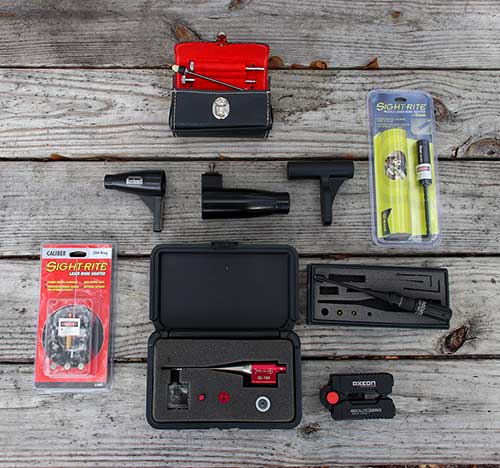
All scoped firearms require precise calibration to align the barrel and optic to the same point—a process known as boresighting. Mainstream boresighters, including collimators and lasers, have seen little innovation since the mid-1990s. These manual tools are designed to get your first round on paper but require ideal lighting, a known distance, and a gun rest. If a scope is bumped or compromised, recalibration can take up to an hour.
Manual methods lack the ability to collect, store, or verify calibration data—making it impossible to recall zero later. Worse, many boresighters are misaligned—left, right, high, or low—leading to time-consuming corrections and wasted ammunition.
The solution
Zero Verify is a patented digital boresighting and zero verification system that combines a smartphone application with sensors along the line-of-sight and line-of-bore. The smartphone becomes a smart boresighting tool. It knows if the optic is tilted, shaken, or off-center. It tracks what your scope sees and how your reticle moves. Then it tells you — clearly and precisely — how to adjust your reticle so that it lines up with your barrel.
The system supports a mounting kit compatible with most firearm and optic combinations — military, sporting, and tactical. Users create profiles in the app for custom gun to scope and ammo combinations. ZV then helps establish an initial boresight reference, saves the reticle position after live-fire confirms your zero, and recalls that position later with an on-screen guidance marker. You make the adjustment by turning the optic’s turrets.